Our research aims to better the lives of our community, our country, and the world.
In the news
After the fire — how plant life is recovering following the Kenow wildfire
Dr. Jenny McCune and her students examined plant life in both burned and unburned plots in Waterton Lakes National Park
Radio and X-ray telescopes spot giant explosions launching matter into space from neutron stars
ULethbridge team part of international cohort behind discovery
University of Lethbridge research projects earn SSHRC funding support
Three research projects awarded nearly $200,000 in SSHRC funding
Create, Inquire, Discover
We are home to some of the world’s brightest minds and most accomplished researchers. We foster the scholarly development of our researchers and provide our students and postdoctoral fellows with an educational experience that is enhanced by experiential learning opportunities, advanced mentorship and career development. We invest strategically to build provincially-, nationally- and globally-recognized research portfolios and support emerging areas of research excellence and collaborations.
$15.8 million
Annual research funding (2021/22)
#1
Medical & Science Grants (Primarily Undergraduate category Maclean's University Rankings, 2023)
38
Research Chairs
Prepare the next generation for a changing world
The world is changing. Our goal is to train highly qualified researchers and practitioners who will contribute to a knowledge-driven future. Our renowned faculty members actively include students and trainees in the investigative journey. We are unwavering in our commitment that students learn new ways of seeing the world, integrate knowledge across disciplines, develop critical-thinking skills and become engaged global citizens.
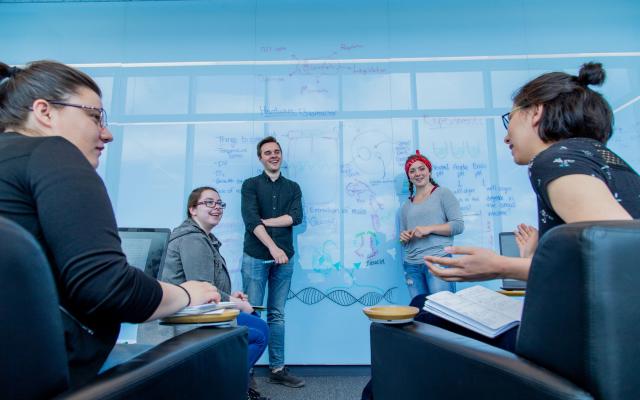
Shining Students | iGem
At uLethbridge, our students play a key role in the discoveries they learn about in the classroom. By participating in the investigative journey, your learning goes beyond the theory to practical application.
Connected to community
Our research is firmly connected to the local community, the local geography, our national landscape and further afield, to a broad range of international settings and partners. We connect researchers, scholars and artists with community organizations, governmental agencies, non-governmental organizations, industry and the public to address the important questions facing the communities we serve.

Chess Gives At-risk Youth a Chance
As part of a unique youth sentencing initiative, uLethbridge faculty member Dr. Lance Grigg, a multidisciplinary team of researchers and graduate students, and a Provincial Court of Alberta judge are exploring how chess affects youths' thought-processes and decision-making.
From idea to industry
New creative ventures, innovative applications and informed public discourse bolster Alberta’s social, cultural and economic prosperity. We are committed to developing mutually supportive relationships and partnerships with all sectors (public, private, and not-for-profit) to ensure translation of knowledge for the betterment of society.

From prairie to pharmacy
Working with Indigenous communities, Dr. Roy Golsteyn and his research team are investigating how prairie plants their chemical properties can fight diseases like cancer.